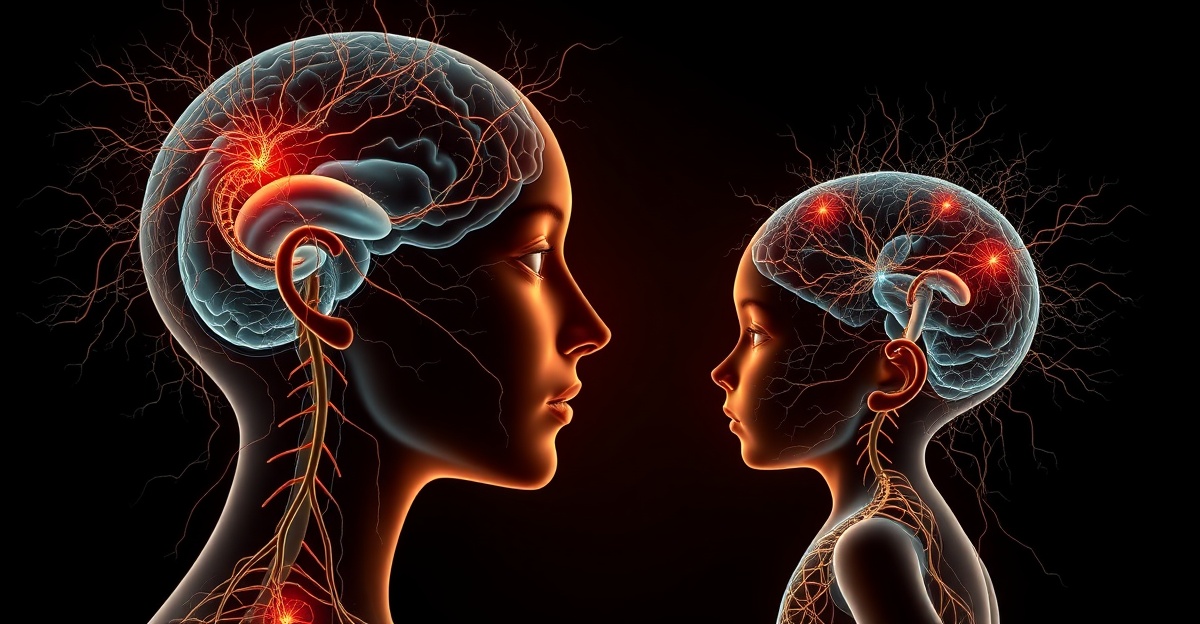
There's a profound biological reality: mothers pass their nervous system patterns to their children. If a mother has unprocessed trauma, PTSD, anxiety, or other mental health conditions affecting her nervous system, her child inherits a nervous system shaped by that.
This isn't blame. It's biology and an opportunity for family healing.
The Science of Maternal Transmission
During pregnancy and early childhood, a baby's nervous system is literally shaped by the mother's nervous system.
The baby's nervous system doesn't develop in isolation. It develops through attunement with the mother's. If the mother is dysregulated, the baby's emerging nervous system learns dysregulation.
This happens through:
Stress hormone transmission - The mother's cortisol and adrenaline cross the placenta and shape fetal development.
Mirror neuron activation - Babies unconsciously mirror the nervous system state of their caregiver.
Attachment patterns - If the mother is dysregulated, her capacity for secure attachment is limited, affecting the child's attachment style.
Modeled responses - Children learn how to respond to stress by watching their mother's responses.
Ancestral transmission - As discussed in epigenetics, trauma patterns can be encoded in DNA and passed on.
The Experience for the Child
A child of a mother with PTSD or untreated anxiety might:
- Have an inherently more activated nervous system
- Experience hypervigilance or anxiety without understanding why
- Have difficulty self-soothing
- Struggle with emotional regulation
- Experience their own trauma more intensely
- Have anxiety or PTSD symptoms with no direct cause
- Feel responsible for regulating the mother's nervous system
None of this is the mother's fault. She's doing her best with an unhealed nervous system.
The Mother's Experience
For mothers struggling with PTSD or anxiety disorders:
There's often profound guilt. "I'm damaging my children with my dysregulation."
There's also practical challenge. Parenting requires emotional regulation you don't have. Keeping children safe while managing your own nervous system dysregulation is incredibly hard.
And there's often isolation. You can't talk about this struggle without feeling judged.
A Compassionate Reframe
Here's the truth: If you're a mother healing from trauma, you're doing one of the most important things possible.
Your healing isn't just for you. It's for your children. When you heal your nervous system, their nervous system is literally changed. The dysregulation they inherited is addressed.
Your children don't need a perfect mother. They need a mother who's willing to heal. That willingness to do your own work is the greatest gift you can give your children.
What Healing Looks Like
For mothers with trauma, healing involves:
Your own nervous system work - Therapy, somatic work, regulation practices. This is the foundation.
Creating safety - For yourself and your children. A regulated parent creates a safe nervous system container for children.
Self-compassion - You're not failing your children by having struggled. You're teaching them that healing is possible.
Honest communication - Age-appropriate honesty about your struggles. "Mommy's nervous system sometimes gets scared, but I'm learning to help it calm down."
Modeling regulation - Showing your children how you regulate: "I'm going to take three deep breaths. I'm going to go outside. I'm going to call a friend."
Getting support - Therapy, support groups, coaching. You don't have to do this alone.
Addressing your own history - Often mothers' trauma traces back further. Healing your own generational patterns is part of the work.
When to Seek Help
Consider professional support if:
- Your PTSD or anxiety is affecting your ability to parent
- Your children are showing anxiety or trauma symptoms
- You're having thoughts of harming yourself or your children
- You're using substances to manage stress
- Your relationships are being severely affected
- You feel hopeless about change
Professional support isn't failure. It's strength.
The Ripple Effect
When a mother heals her nervous system:
- Her children's nervous systems begin to regulate
- Patterns of inherited dysregulation are interrupted
- Future generations inherit a healthier nervous system foundation
- The family system shifts
Your healing creates health for your whole lineage.
Children Healing Too
As mothers heal, children often naturally begin to heal. But children might also benefit from their own support—whether therapy, somatic work, yoga, or other practices that help them process inherited patterns and develop their own regulation capacity.
The Community Level
Imagine the ripple effect if many mothers received support for their trauma and anxiety. Generations of children would inherit healthier nervous systems. Intergenerational trauma patterns would be interrupted.
This is possible. It starts with individual mothers getting help and support.
A Message for Struggling Mothers
You're not failing your children by having trauma or anxiety. You're failing them only if you stop trying to heal.
Your willingness to do your own work, despite how hard it is, is the most loving thing you can do.
Your children need their mother healed, not perfect. And you're worth healing. Not just for them, but for yourself.
You're worth it.