Much of modern medicine and mental health focuses on symptom management: fix the anxiety, resolve the depression, treat the PTSD. This is important work, but it's not the same as true healing.
True healing is integrated healing. It's about making you whole.
What Integrated Healing Means
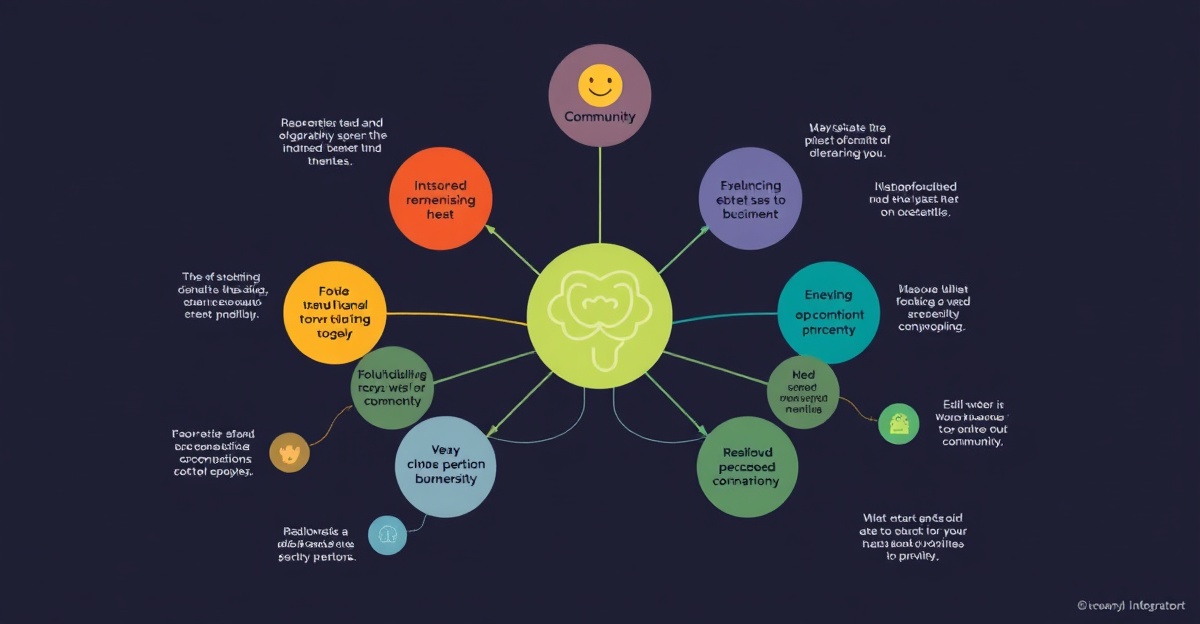
Integrated healing means addressing all aspects of yourself:
Physical healing - Your body, nervous system, and health. Regulation, embodiment, physical well-being.
Emotional healing - Processing and integrating emotions. Developing emotional capacity and flexibility.
Mental healing - Working with thoughts, beliefs, meaning-making, narratives. Cognitive integration.
Relational healing - Healing your capacity for connection, addressing relational patterns, building healthy relationships.
Spiritual healing - Connecting to meaning, purpose, values, something larger than yourself.
Systemic awareness - Understanding how trauma is embedded in family systems, cultural systems, and social systems.
Community and collective healing - Recognizing that individual healing happens in context of community and culture.
Why Fragmented Healing Falls Short
If you work only with your mind (through talk therapy), your body still carries trauma. Dysregulation persists.
If you focus only on physical regulation (breathing, exercise), your mind might still have distorted beliefs and unprocessed emotions.
If you address only symptoms and not meaning, you can feel "better" while still feeling lost and purposeless.
If you heal individually but remain in the same unhealthy relationships or systems, the healing has limited impact.
The Integration
Integrated healing weaves these dimensions together:
You're working with your nervous system AND processing emotions AND examining beliefs AND building healthy relationships AND connecting to purpose.
These don't happen in isolation. They inform each other:
- As your nervous system stabilizes, you can access emotions you've been numbing
- As you process emotions, your beliefs shift
- As your beliefs shift, your relational choices change
- As your relationships heal, your sense of safety deepens
- As you connect to purpose, you're more motivated to do the work
What This Requires
Integrated healing typically requires:
Multiple modalities - You might work with a therapist AND a somatic practitioner AND a spiritual director AND a coach AND community. Different tools for different aspects of self.
Time - Integration happens gradually, not in a 12-week program. Real healing takes years.
Your active participation - You're not a passive recipient. You're actively choosing and building your healing.
Self-knowledge - Integrated healing requires knowing what you need, what works for you, what your values are.
Community - Healing is often isolated. Integrated healing usually includes community support.
Integrative Health Approaches
Some practitioners and centers specifically offer integrative approaches:
Integrative medicine combines conventional medicine with evidence-based complementary approaches.
Holistic therapy addresses multiple dimensions of the person.
Trauma-informed yoga combines physical practice with trauma awareness.
Spiritual direction alongside therapy.
Community healing circles that address individual and collective trauma.
Your Integrated Healing Plan
Building your own integrated approach might look like:
- Work with a trauma-informed therapist for core healing
- Develop a somatic practice (yoga, dance, movement)
- Build your relational capacity through healthy relationships and communication
- Explore your values and connect to purpose
- Create or join community
- Develop a spiritual practice (formal or informal)
- Address systemic factors (family patterns, cultural healing, social awareness)
The Goal
The goal of integrated healing isn't perfection. It's wholeness. It's being increasingly integrated—where your body, mind, heart, spirit, and relationships are more aligned and coordinated.
Where you're not fragmented into parts fighting each other, but increasingly a coherent whole person.
That's what real healing looks like.