Epigenetic Trauma: How Trauma is Encoded in DNA
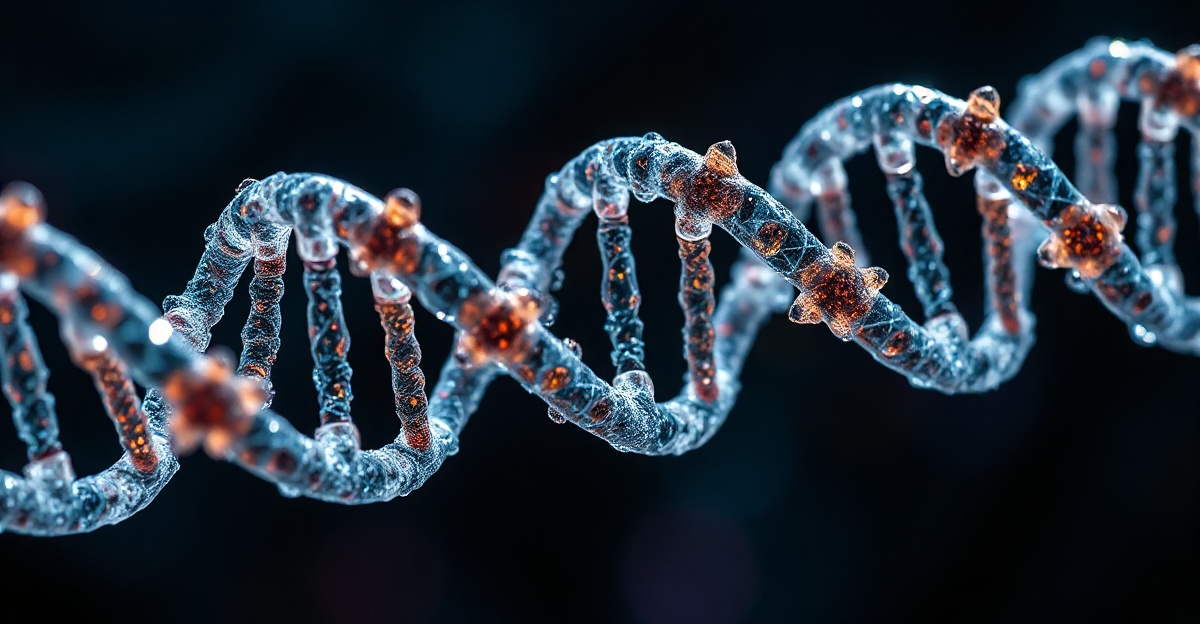
You might be carrying your ancestor's trauma in your DNA. This isn't a metaphor—it's an emerging scientific reality called epigenetics.
What is Epigenetics?
Epigenetics is the study of how environmental factors and experiences can change the way genes are expressed, without changing the DNA sequence itself.
Think of DNA as a computer program. The code doesn't change, but you can add instructions that control whether certain programs run or not. These "control instructions" are chemical markers (called methyl groups) attached to DNA.
These markers can be added and removed based on environmental factors, including stress and trauma.
Epigenetic Trauma
When someone experiences severe trauma, their nervous system's stress response is intensely activated. This triggers epigenetic changes—chemical markers are added to genes related to stress response.
These changes can:
- Make the nervous system more reactive to stress - Increase inflammation - Affect metabolism and immune function - Influence behavior and emotional regulation
In other words, trauma literally rewrites the chemical instructions on how your genes express.
Transgenerational Epigenetic Inheritance
Here's where it gets remarkable: these epigenetic changes can be passed to offspring.
If your parent experienced severe trauma, the epigenetic changes in their DNA can affect the genes that get expressed in your DNA. You inherit not just genes but gene expression patterns shaped by your parents' trauma.
This means: - You might have inherited a more reactive nervous system from a parent's trauma - Your stress response might be triggered more easily, even if you haven't experienced the same trauma - Certain health conditions might be more likely - Your emotional regulation might be affected
Research Evidence
Studies on transgenerational epigenetic trauma have shown:
- Holocaust survivors' children have different stress hormone patterns - Children of Vietnam War veterans have PTSD symptoms related to parental exposure - Intergenerational effects of slavery, genocide, and massive historical trauma - Animal studies showing trauma effects across multiple generations
This isn't deterministic—epigenetic markers aren't permanent—but the correlation is real.
What This Means for Your Healing
If you're experiencing trauma responses that seem disproportionate to your own experience, you might be healing ancestral trauma.
Understanding this can be liberating: "This hypervigilance isn't just my neurotic flaw. It's my nervous system responding to ancestral threat."
It also means: - Your healing matters not just for you but for future generations - Epigenetic changes you make through trauma healing are also heritable - Your healing ripples forward through your children's genes
How Healing Changes Epigenetic Expression
Just as trauma can change gene expression, healing can change it back.
Through: - Nervous system regulation - Stress reduction - Trauma processing - Healthy relationships - Safe environment - Spiritual practices
You can influence the epigenetic markers on your genes. You can "rewrite the instructions."
Over time, these changes can become stable and can be passed to the next generation.
Intergenerational Healing
This understanding reframes healing as an act of love toward future generations.
When you heal your trauma, you're not just healing yourself. You're changing the epigenetic legacy you pass on. Your children inherit a less reactive nervous system if you've done your healing work.
This gives profound meaning to the work of healing.
The Science and the Sacred
Epigenetics bridges science and the sacred. It provides a biological mechanism for what many spiritual traditions have always known: that trauma and healing ripple across generations.
Your grandmother's unprocessed trauma might be encoded in your genes. Your healing might liberate your grandchildren from patterns they never even experienced directly.
Practical Implications
If you're aware that you're carrying ancestral trauma:
Honor the inheritance - Acknowledge that you're healing not just your own trauma but generational patterns.
Grieve what was inherited - It's okay to feel sad or angry about inheriting trauma you didn't cause.
Do your work - Knowing about epigenetics isn't passive. Your healing work directly changes the epigenetic expression.
Create new patterns - Your healing creates new epigenetic patterns that your children can inherit.
Community and collective healing - As more people heal, there's a collective epigenetic shift possible.
The Invitation
Your healing is an act of courage that ripples forward through time and through generations. You're not just healing yourself—you're liberating your lineage.
That's profound power.
Don't Miss Future Articles
Subscribe to The Trauma Healer RSS feed to receive new insights on trauma healing, nervous system regulation, and post-traumatic growth.
Subscribe to RSSWant Personalized Support?
Education is powerful, but one-on-one coaching takes your healing to the next level. Jess can help you apply these concepts to your unique experience.
Book a Discovery Call